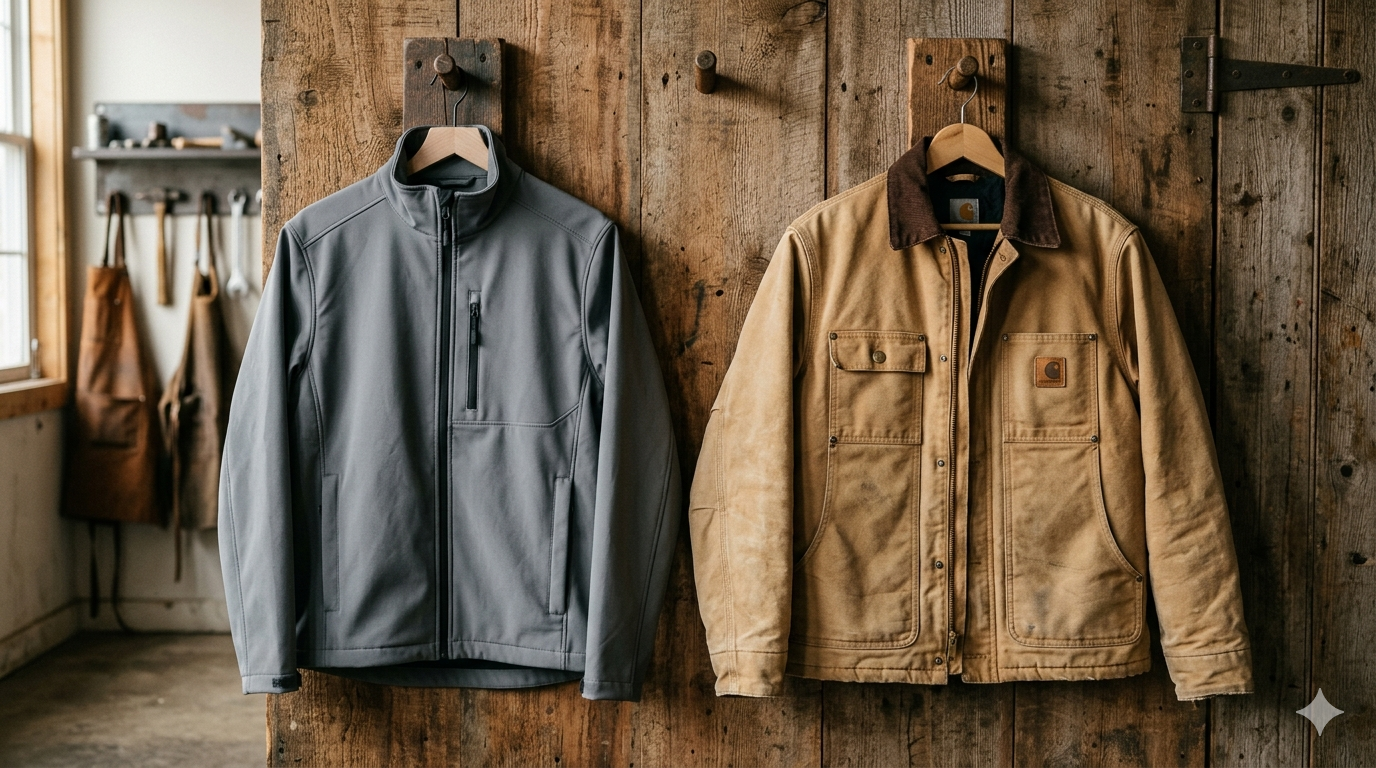
Picking between a softshell vs canvas work jacket comes down to what your crew actually does on a typical day. Both fabrics earn their place on jobsites, but they’re built for different kinds of work. This guide breaks down where each fabric wins, how they handle abrasion and weather, what they cost over a season, and which one your crew should standardize on. By the end you’ll know exactly which jacket to spec for your next quote.
What Each Fabric Is Actually Made From
Canvas work jackets are heavy-duty cotton, usually 12 to 14 ounce duck weave. The fabric is thick, stiff out of the box, and softens with use. It resists abrasion, sparks, and snags better than almost any synthetic in the same price range. Most canvas jackets come paired with a quilted cotton or polyester lining for cold months, and an unlined version for shoulder season.
Softshell jackets are typically a three-layer synthetic — woven nylon or polyester face, a stretchable membrane, and a fleece backer. The face fabric sheds water and wind, the membrane breathes, and the fleece keeps body heat in. Softshell stretches with the wearer, so it feels closer to athletic wear than traditional workwear.
Different work jacket fabric, different jobsite. Here’s how the two compare on the things that actually matter to a foreman.
Why Fabric Choice Drives Everything Else
Cost, weight, decoration options, and how the jacket survives a year of use all flow from the work jacket fabric you pick. Fabric first, cut and color second.
Softshell vs Canvas Work Jacket: Which Survives Real Wear
Canvas wins outright on abrasion. If your crew works around lumber, concrete, sharp metal, or roofing material, canvas takes hits that softshell does not. The thick weave handles nail bag rivets dragging across it, dropped hammers glancing off, and contact with rough lumber edges. After six months on a framing site, canvas looks worn-in. After six months on a framing site in softshell, you’re replacing jackets.
Softshell wins on flexibility and lighter wear. Crews doing service calls, light installation, or driver-and-loader work — where the jacket is more about staying warm and dry than surviving punishment — get longer life out of softshell. The synthetic face doesn’t pill or fuzz the way some lighter cotton blends do. Reinforced softshell options exist for higher-wear roles, but the gap with canvas on heavy abrasion is real.
For mixed crews, the right move is usually canvas for the trades-in-the-field roles, softshell for the supervisors, dispatchers, and route drivers who interface with customers.
Weather: How Each Fabric Handles Cold, Wind, and Rain
Softshell handles wind and light rain better than canvas. The membrane and DWR coating shed drizzle and shake off snow before it soaks through. In wind, softshell stops cold faster than unlined canvas because there’s no airflow through the weave.
Canvas insulated with a quilted lining handles dry cold extremely well. The thick fabric blocks wind by sheer mass, and the lining traps body heat the way a heavy denim jacket does. In wet conditions, canvas absorbs and gets heavy. A canvas jacket caught in a 30-minute downpour stays wet for the rest of the shift unless you have a dry one to swap into.
Neither fabric is fully waterproof unless you’re paying for a specific shell rating, and we don’t claim that on a standard work jacket. For genuinely wet jobsites — refinery work, marine, ice and water roofing — you want a dedicated rain shell layered over either fabric.
Embroidery, Print, and How Decoration Holds Up
Canvas takes embroidery exceptionally well. The dense weave gives the embroidery thread something to bite into, the design sits flat, and the contrast holds for the life of the jacket. Most crews running custom jackets pick canvas for the heavy-decoration roles — the foreman jacket with the company crest, the supervisor jacket with the full back logo.
Softshell handles embroidery too, but smaller designs work better. Larger embroidered logos can pucker on softshell because the synthetic stretches under the embroidery thread. Screen print or heat-transfer vinyl tends to look cleaner on softshell at full-back size. Embroidery or print, your call — we’ll recommend the right method after seeing your art.
For mixed orders — embroidery on canvas, print on softshell — we run both decoration types in the same purchase order. No setup fee surprises.
Softshell vs Canvas Work Jacket: Cost Per Year, Not Per Jacket
A canvas work jacket costs more upfront than an entry-level softshell — typically $40 to $60 depending on weight, lining, and decoration. Softshells run $35 to $55 in the same volume tiers. So the per-unit cost on canvas is higher.
Lifespan is where canvas catches up. A field-tested canvas jacket on a moderate-wear crew lasts 18 to 36 months. A softshell on the same crew lasts 12 to 18 months. Once you amortize the purchase over actual use, the cost-per-month-of-wear is comparable, and canvas often comes out cheaper.
Reorders shift the math too. Reorder on file, ship in days — once we have your design and size breakdown, replacement orders skip setup costs entirely. Crews that standardize on one work jacket fabric see cleaner long-term economics than crews that mix-and-match.
Which One Should Your Crew Spec?
Pick canvas if your crew works around heavy materials, sparks, abrasion, or in dry-cold conditions. Construction, framing, masonry, demolition, heavy mechanical, and rough-fabrication crews are canvas-first by default. Add the insulated lining for fall-through-winter, drop the lining for shoulder season.
Pick softshell if your crew is in service vehicles, light installation, route delivery, supervisor roles, or any work where wind and light moisture matter more than abrasion resistance. Field service, HVAC techs, plumbers running calls, electricians on commercial maintenance, dispatchers, and customer-facing roles tend to land here.
For roadwork, utilities, and any DOT-funded project, neither answer matters until you’ve sized the hi-vis question first — Class 2 and Class 3 are required by spec, not preference. We carry both fabrics in ANSI 107 hi-vis. The ANSI/ISEA 107 standard from the International Safety Equipment Association governs reflective coverage, color values, and certification — we keep the documentation on file for your compliance audits.
Putting It All Together: Practical Crew-Ready Recommendations
For most general construction outfits, the right answer is: canvas for the field crew, softshell for the supervisors, both with the same logo. This keeps the brand consistent without forcing one fabric across roles where it doesn’t fit. Standardize on jobsite-grade durability where the work is heaviest, and let lighter softshells cover the rest.
If you’re still weighing softshell vs canvas work jacket options for your specific industry, our team can spec the right blend after talking through what your crew actually does day-to-day. Free artwork comes back in 24 hours, bulk pricing scales from 12 jackets to 500+, and reorders ship in days once your design is on file.
Growing crew? We keep your artwork and size breakdown on file for fast reorders. Request a quote to get started, or see our recommendations for trades on the construction crews page.
GET A QUOTE