Hi-Vis Work Jackets: ANSI-Rated Custom Options for Crews
For anyone working near traffic or heavy equipment, a hi vis jacket is not just comfort — it is compliance. ANSI-rated high-visibility jackets keep crews seen in low light and bad weather, and ordering them custom lets you add your company logo without compromising the safety rating. This guide covers choosing an ANSI-rated hi vis jacket and branding it correctly.
The key is matching the ANSI class to the hazard and keeping your logo decoration within the rules so the garment stays certified.
Who needs a hi-vis jacket
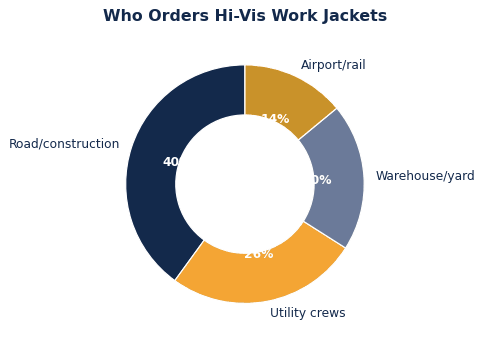
Road and construction crews lead, followed by utility, warehouse and yard, and transportation workers. The breakdown below shows common users of custom hi-vis jackets.
If your crew works near moving vehicles, a Class 3 jacket with sleeves offers the highest visibility; Class 2 suits lower-speed or off-road environments.
Branding without breaking the rating
ANSI garments require a minimum area of background and reflective material, so logos must be placed and sized carefully. Heat-transfer or embroidered logos in approved zones keep the jacket compliant; oversized prints that cover too much reflective area can void the rating.
Budgeting a crew order
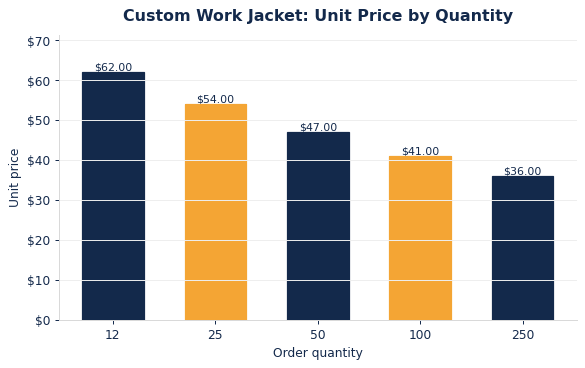
Per-jacket cost falls with quantity, so kitting out a full crew or multiple sites at once is efficient. The curve below helps you plan the order.
| Class | Best for | Note |
|---|---|---|
| Class 2 | Lower speed/off-road | Vest or jacket |
| Class 3 | Near traffic | Sleeves required |
| Custom logo | Any | Keep in approved zone |
Deciding between insulated and softshell warmth too? See our companion guide, our Insulated vs Softshell Work Jackets: A Winter Crew Guide. Explore our custom work jackets or request a quote.
Understanding ANSI classes and where they apply
ANSI/ISEA 107 defines the visibility classes that govern hi vis jackets, and matching the class to the hazard is the core compliance decision. Class 2 garments use a defined minimum of background and reflective material suitable for lower-speed environments and workers who are not in the immediate path of traffic. Class 3 garments require more material and typically sleeves, providing the highest visibility for workers near higher-speed roadways or in low-light conditions. Knowing which class your work demands keeps crews both compliant and genuinely safe.
Environment drives the class more than job title. A utility worker off the roadway may be fine in Class 2, while the same worker directing traffic near fast-moving vehicles needs Class 3. Reading your site conditions — traffic speed, proximity, lighting — and assigning the class accordingly is more reliable than a blanket rule, and it ensures each crew member wears exactly the protection their task requires.
Reflective tape, colors, and low-light performance
A hi vis jacket’s protection comes from two elements working together: fluorescent background material that stands out in daylight and retroreflective tape that bounces vehicle headlights back at night. The background color — lime-yellow or orange — is chosen for contrast against the work environment, while the tape placement follows the standard to outline the human form so drivers recognize a person, not just a bright patch. Both must meet minimums for the garment to carry its rating.
Low-light and nighttime work make the reflective element critical, so tape condition matters over the jacket’s life. Reflective performance degrades with wear, washing, and abrasion, so inspecting and retiring jackets whose tape has dulled keeps crews visible when it counts. Choosing quality tape and following care guidance extends the protective life of the garment, which is why care is a safety issue, not just a maintenance one.
Adding branding without voiding the rating
Custom hi vis jackets let you add a company logo, but the branding must respect the compliance geometry. ANSI garments require minimum areas of background and reflective material, so a logo cannot cover so much of those areas that the garment drops below its rating. Placing heat-transfer or embroidered logos in approved zones — typically the left chest and a defined area on the upper back — keeps the jacket compliant while still making your brand prominent.
The safest path is to confirm decoration placement and size with the manufacturer before a large custom order, since an oversized print in the wrong spot can void certification. Done correctly, branding and compliance coexist: your crew stays seen and certified while your logo travels every jobsite. Keeping logos within approved zones is a small constraint that protects both safety and your investment.
Care, washing, and extending garment life
A hi vis jacket’s protection depends on its brightness and reflectivity, both of which degrade if the garment is cared for carelessly. Washing according to the manufacturer’s instructions — typically gentle cycles, mild detergent, and avoiding bleach and fabric softener — preserves the fluorescent color and the bond of the reflective tape. Harsh washing and high heat dull the fabric and can lift the tape, quietly reducing the visibility the jacket is supposed to provide.
Because garments in dirty environments need frequent washing, choosing quality construction pays off over time. Well-bonded tape and colorfast fabric survive more wash cycles before fading, extending the compliant life of the jacket. Following care guidance is genuinely a safety practice, since a faded or delaminated jacket no longer performs to its rating even if it still looks wearable at a glance.
Inspection closes the loop. Building a simple routine to check jackets for faded fabric, dulled or peeling tape, and damage — especially for night crews — catches garments that have aged out of usefulness before a worker relies on one that no longer protects. Retiring worn jackets on a schedule keeps the whole crew genuinely visible rather than assuming a jacket is fine because it is still intact.
Common questions about hi-vis work jackets
What is the difference between Class 2 and Class 3?
Class 2 suits lower-speed or off-road environments and workers not in the immediate traffic path, while Class 3 requires more material and usually sleeves for the highest visibility near higher-speed roadways or in low light. Match the class to the traffic speed and proximity at your site.
Does adding a logo affect the ANSI rating?
It can if the logo covers too much of the required background or reflective material. Keep heat-transfer or embroidered logos within approved zones like the left chest and a defined upper-back area, and confirm placement with the manufacturer before a large order to keep the jacket compliant.
Which color hi-vis jacket should I choose?
Fluorescent lime-yellow and orange are chosen for contrast against the work environment; lime often stands out better against equipment and foliage, while orange contrasts well in some settings. Both meet the standard, so choose the color with the best contrast for your surroundings.
How do I know when to retire a hi-vis jacket?
Retire a jacket when its reflective tape has dulled or the fluorescent fabric has faded, since both reduce visibility below the intended protection. Regular inspection, especially for night crews, keeps the whole team properly visible.
Kitting out a crew that works near traffic?
We’ll match the ANSI class and place your logo without voiding the rating.
Get a Quote