Flame-Resistant (FR) Work Jackets: What Crews Need to Know
Flame-Resistant (FR) Work Jackets: What Crews Need to Know
A crew working near arc-flash equipment or open flame doesn’t get a second chance if the outer layer melts or keeps burning after the source is gone. Flame-resistant work jackets are built to self-extinguish and won’t melt onto skin, which is the entire point of the FR designation — a jacket that merely looks tough but carries no FR rating is a liability dressed as PPE. For safety managers speccing an order, understanding what actually makes a jacket flame-resistant is the difference between real protection and a false sense of it.
This guide breaks down what flame-resistant work jackets need to meet common standards, how treated and inherent FR fabrics compare, and how to spec a jacket that fits your crew’s actual hazard, not just a generic safety catalog listing.
What makes a jacket actually flame-resistant
True flame-resistant work jackets either use fiber that is inherently FR (built into the polymer itself, so it doesn’t wash out) or cotton and cotton-blend fabric chemically treated to resist ignition and self-extinguish. Both approaches have to meet a real standard — NFPA 2112 for flash-fire protection or NFPA 70E-referenced arc ratings for electrical work — not just a manufacturer’s marketing claim of ‘fire resistant.’
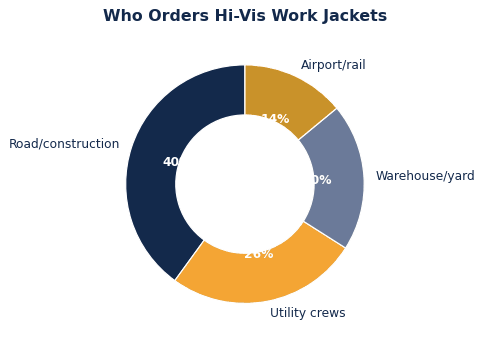
The standard your crew needs depends on the hazard. Flash-fire risk in oil, gas, and chemical settings points to NFPA 2112. Arc-flash exposure around energized electrical equipment points to an arc rating expressed in calories per square centimeter (cal/cm2), sized to the specific task’s incident energy. The chart below shows which standards crews most often reference when they come to us with an RFQ.

Treated vs inherent FR fabric
Treated FR cotton is lighter, more breathable, and generally less expensive up front, but the treatment can degrade over many industrial washes if laundering isn’t done to spec. Inherent FR fiber blends cost more initially but keep their protective rating for the life of the garment regardless of wash count, which matters most for crews facing daily, high-hazard exposure.
Comfort and durability don’t have to lose to protection
Older FR jackets earned a reputation for being stiff, heavy, and hot, and that reputation still drives some crews to quietly swap them for non-rated gear on hot days — which defeats the entire safety investment. Modern FR/modacrylic blends and lighter treated cottons close most of that comfort gap while holding their protective rating, so compliance doesn’t come at the cost of a jacket nobody wants to zip up.
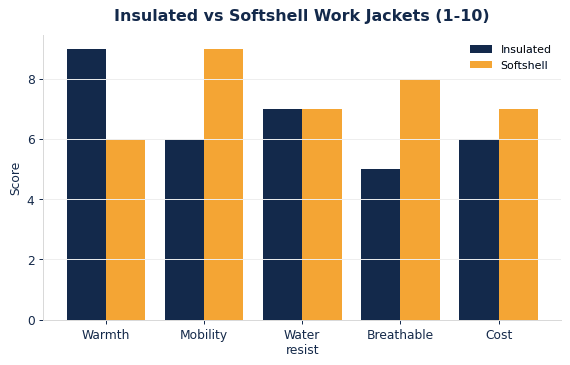
The chart compares the main fabric families on the factors crews and safety managers weigh when choosing flame-resistant work jackets for daily wear.

Spec’ing an order that fits your crew’s hazard
Match the jacket to the actual task, not the highest rating available. Over-speccing adds cost and weight without adding real protection for a lower-hazard job, while under-speccing leaves a genuine gap. The table below is a starting point for matching hazard level to fabric choice.
| Hazard level | Recommended fabric | Typical standard |
|---|---|---|
| Flash-fire risk (oil/gas/chem) | Inherent FR blend | NFPA 2112 |
| Arc-flash exposure (electrical) | FR treated cotton or blend, arc-rated | NFPA 70E-referenced cal/cm2 |
| General industrial, low hazard | Treated FR cotton | Company-specific spec |
Confirm your crew’s actual incident energy or hazard category with your safety team before ordering, since the wrong rating either underprotects or overspends. For sizing a jacket that layers correctly under FR gear, see our companion Custom Work Jackets for Electricians & Utility Crews, and browse fabric options across our custom work jackets range.
Laundering FR gear without voiding the protection
Flame-resistant work jackets only protect as designed if they’re laundered according to the manufacturer’s care instructions, and this is where treated FR fabric most commonly loses its rating early. Household fabric softener, bleach, and certain industrial detergents can strip the flame-resistant treatment out of cotton-based FR fabric over repeated washes, even though the garment looks and feels completely normal afterward.
Inherent FR fiber is more forgiving here, since the flame resistance is built into the fiber itself rather than applied as a surface treatment, but it’s still worth confirming laundering guidance with the manufacturer, especially for crews using an industrial or shared laundry service that may not know the garments require special handling.
If your crew uses a third-party industrial laundry service, put the FR care requirements in writing as part of the contract, and periodically test-verify with the manufacturer or a lab rather than assuming the service is following the spec correctly. A single batch washed incorrectly can quietly compromise an entire crew’s protection without anyone noticing until an inspection or, worse, an incident.
Contamination is its own hazard
Flammable contamination — oil, grease, or certain chemicals — on an FR jacket can ignite even on a rated fabric, since the treatment resists ignition from the fabric itself, not from a flammable substance sitting on top of it. Any visibly contaminated FR jacket should be cleaned or replaced before continued use.
Building FR requirements into a company safety program
Flame-resistant work jackets work best as part of a documented program, not a one-off purchase — that means a written policy on which roles require FR gear, what rating is required for each task, and a replacement schedule tied to visible wear or a set number of industrial washes rather than a vague ‘as needed’ standard.
Train crews on layering rules alongside the jacket purchase itself. A rated FR jacket loses much of its value if worn over synthetic base layers that can melt, so the safety program should specify approved undergarments as clearly as it specifies the outer jacket’s rating.
Revisit the hazard assessment periodically, not just at initial purchase. A crew’s exposure can change as equipment, processes, or job sites shift, and a jacket rated for last year’s task may not match a new, higher-risk assignment without a fresh review.
Document every jacket’s rating and issue date
Keep a simple log of which jacket was issued to which worker, its rating, and the issue date. It turns a replacement decision from a guess into a quick lookup, and it gives you a clean record if a safety audit ever asks for proof of compliance.
Frequently asked questions
How often do flame-resistant work jackets need to be replaced?
Replace an FR jacket when the fabric shows visible wear, contamination that won’t wash out, or damage to seams and closures, and always follow the manufacturer’s guidance on wash count for treated fabrics. Inherent FR fiber holds its rating for the garment’s working life barring physical damage.
Can flame-resistant work jackets also be arc-rated?
Yes — many FR jackets carry both an NFPA 2112 flash-fire rating and a separate arc rating in cal/cm2. Confirm both numbers meet your specific hazard assessment rather than assuming one certification covers the other.
Need FR jackets rated for your crew’s hazard?
Send us your standard and headcount and we’ll spec flame-resistant work jackets that fit the job.