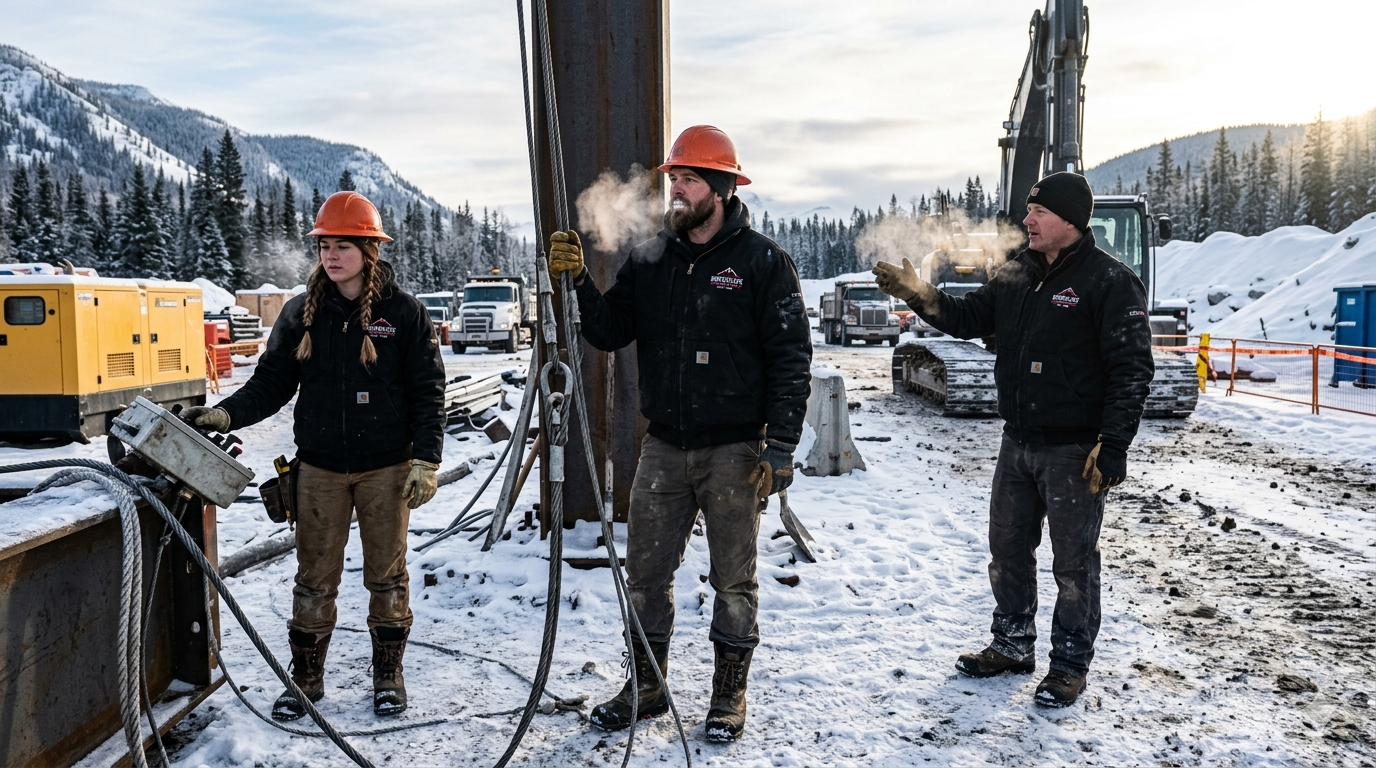
Picking the right winter work jacket for your crew is the difference between a productive frame-out in February and an early shift end. The right jacket keeps the foreman moving, the apprentice safe, and the supervisor warm enough to actually inspect the work. This guide breaks down how to pick a cold-weather work jacket by climate, by job role, and by decoration method, so your next bulk order is right the first time.
What a Real Winter Work Jacket Has to Do
Cold-weather work jackets juggle three competing requirements. They have to insulate without restricting movement, shed weather without overheating the wearer mid-shift, and decorate cleanly so the company logo holds up through a season of abuse. A jacket that nails one of those and fails the other two ends up unworn by week six.
Insulation type matters more than total weight. Synthetic fills like polyester and Primaloft retain warmth even when wet, which is the deciding factor for outdoor crews who get caught in rain or snow mid-shift. Down compresses better and packs warmer per ounce, but a wet down jacket is a useless jacket until it dries out.
For most crews working a typical northern winter, a synthetic-insulated softshell or canvas hybrid in the 80–120 gram fill range hits the right balance. That weight handles 20°F to freezing comfortably with a base layer underneath, and stays workable up to 50°F shoulder-season weather.
Climate-Based Spec: How Cold Is Your Cold
Match your jacket spec to the lowest temperature your crew will reasonably work in, not the average. A crew that frames in 10°F three weeks a year still needs jackets rated for that low, even if 35°F is more typical.
For southern and mid-Atlantic crews working 25°F to 50°F most of winter, a midweight canvas with a quilted lining is plenty. For Midwestern and Mountain West crews working in single digits and below, you want an insulated parka with hood and storm cuffs. For Northern crews working below zero (Plains, Upper Midwest, Maine, Northeast), insulated bib + insulated parka is the realistic answer — a single jacket alone is the wrong product.
The bib question matters more than people think. If your crew works on roofs, decks, or anything elevated below freezing, the gap between jacket bottom and pants opens every time someone reaches up. Insulated bibs eliminate that gap.
Job-Role Considerations
Foremen and supervisors who walk and inspect more than they swing tools want lighter, more breathable jackets — softshell with light insulation. Generating heat is not their problem; staying warm during stationary inspection is.
Field crews swinging hammers and running power tools generate considerable body heat once moving, then cool fast at break. They want layered systems — a windproof shell over an insulated mid-layer, both branded with the company logo, so they can shed when working and add when standing.
Apprentices doing variable work without yet knowing what they need tend to over-buy. Spec them with a midweight insulated softshell in your standard color and let them learn what their preferences are after a season.
Decoration That Survives Winter
Embroidery on a winter work jacket is straightforward on the chest and upper back where the fabric is reinforced. Logo placement on quilted insulation panels is harder — the embroidery thread tends to compress the loft and leave a visible dimple.
For full-back logos and large designs on insulated fabrics, screen print or heat-transfer vinyl tends to look cleaner than embroidery. The synthetic face fabric on most insulated jackets accepts both well.
Multi-color logos on hi-vis insulated jackets need extra care. ANSI 107 reflective coverage thresholds matter even on cold-weather variants, so logo placement is restricted. Our designers will recommend the right zone after seeing your art.
Putting Together the Right Winter Work Jacket Order
For a typical 12–50 person crew operating in a Midwestern or Northeastern climate, the practical winter work jacket setup is: insulated softshell in company color with embroidered chest logo for foremen and supervisors, insulated parka with full-back screen-printed logo for field crews, hi-vis Class 2 or Class 3 insulated jacket for crews on roads or near traffic.
Start with one season’s order based on current crew size, then build the size and style breakdown into a saved profile. Reorder on file ships in 5–7 business days when someone leaves and a new hire needs gear matched to the crew.
Growing crew? We keep your cold weather work jacket spec, sizing chart, and decoration on file so reorders skip setup costs entirely. Request a quote with your quantity and target date, or browse our recommendations for trades on the construction crews page.
GET A QUOTE